Yara Krause · 11 September 2026
How Burrowing Wildlife Reshapes Sediment Dynamics in Isolated Coastal Dune Habitats
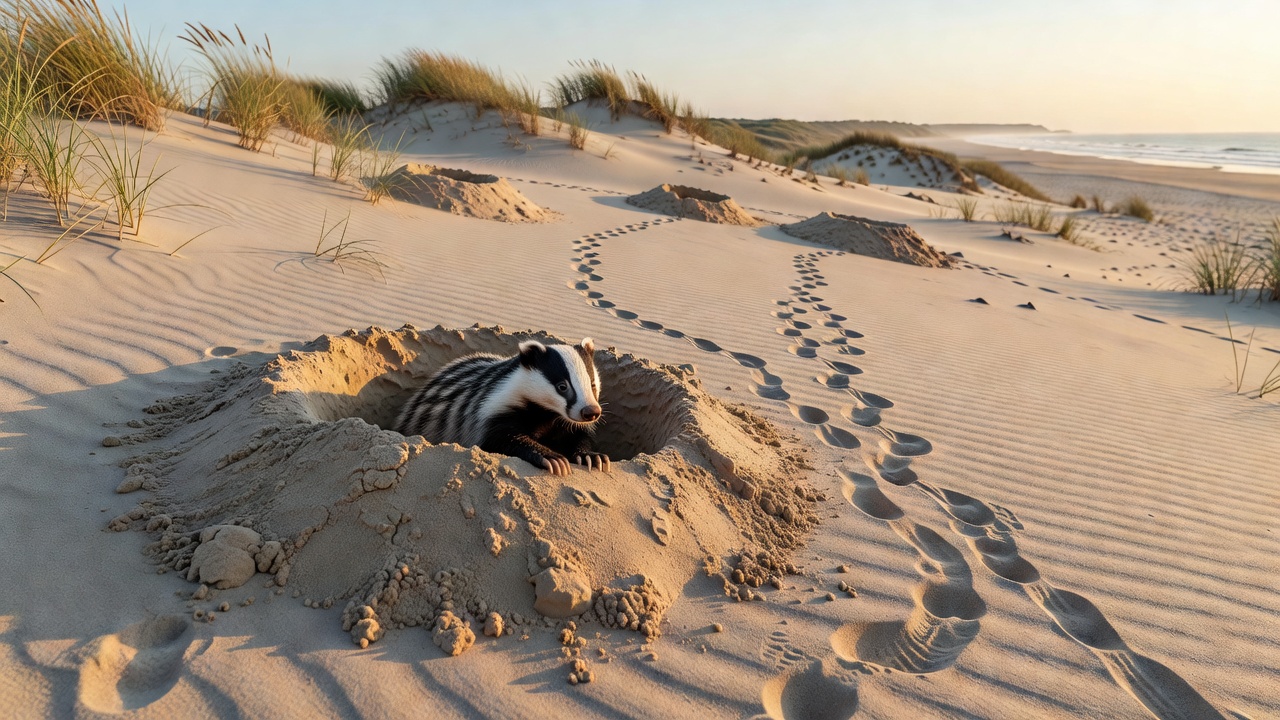
Burrowing wildlife plays a measurable role in altering sediment movement within isolated coastal dune habitats where wind and wave action already shape loose sand deposits on a daily basis. Researchers have documented how animals including ghost crabs, European rabbits, and various rodent species excavate tunnels and chambers that shift sand grains from deeper layers toward the surface, and this activity modifies local erosion patterns while influencing how dunes respond to storm events.
Common Burrowing Species and Their Habitats
Isolated dune systems along coastlines in North America, Australia, and parts of Europe support distinct communities of burrowers adapted to shifting sands. Ghost crabs create extensive networks of burrows that reach depths of up to one meter, and these structures expose finer sediment particles that wind can then transport more easily across the dune surface. European rabbits establish warrens in stabilized dune areas where vegetation provides cover, and their digging brings coarser material upward while compacting surrounding soil through repeated foot traffic.
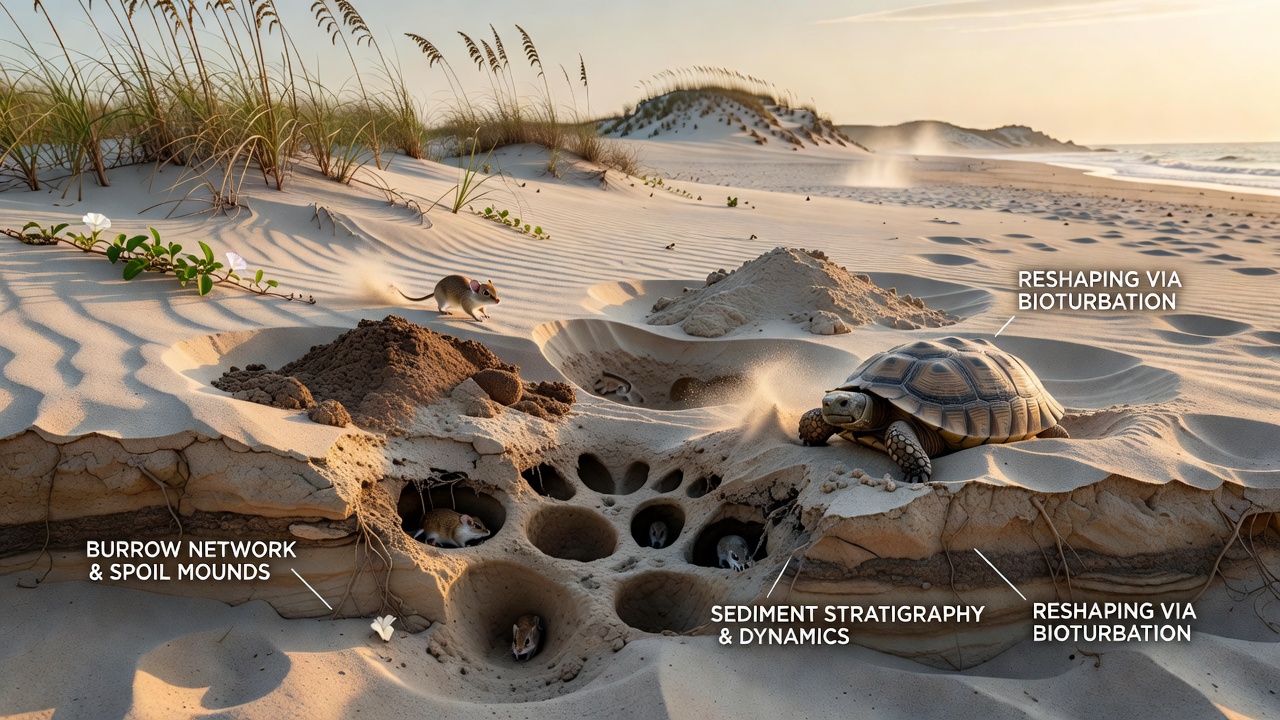
Observers note that smaller mammals such as deer mice and voles contribute to surface turnover in less obvious ways, and their shallow tunnels create micro-channels that allow rainwater to infiltrate faster than it would on undisturbed sand. Data from long-term monitoring sites shows these combined activities increase overall sediment mixing rates compared to areas without significant animal presence.
Mechanisms of Sediment Redistribution
Excavation processes move sediment both vertically and laterally within dune profiles. When animals push material out of burrow entrances they form small mounds that alter local wind flow patterns, and these mounds can trap wind-blown sand on their leeward sides while accelerating erosion on exposed flanks. Studies indicate that burrow collapse events during heavy rainfall further redistribute sand downslope, creating irregular surface topography that affects subsequent aeolian transport.
Researchers have measured how burrow density correlates with changes in sediment grain size distribution, and higher burrow counts often coincide with increased proportions of fine particles at the surface because deeper layers contain more silt and clay brought up during digging. This mixing influences dune permeability and how quickly surfaces dry after precipitation, which in turn affects how readily wind can mobilize grains during dry periods.
Findings from Monitoring Programs
Long-term observations at isolated dune reserves have captured seasonal variations in burrowing intensity, and activity peaks often align with breeding cycles of resident species. In one Australian coastal site, burrow counts doubled between late spring and early summer, and this increase corresponded with measurable changes in surface roughness that researchers linked to altered sand transport rates. Similar patterns appear in North American monitoring data where crab activity intensifies as temperatures rise.
A September 2026 report compiled by coastal ecologists across multiple continents highlighted how isolated habitats with limited human access still experience significant sediment reworking from wildlife alone. The analysis compared sediment profiles inside and outside fenced exclosures, and results showed that areas with active burrowing contained 15 to 25 percent more mixed grain sizes within the upper 30 centimeters of dune structure.
Interactions wth Natural Dune Processes
Wind-driven sediment flows interact with burrowed surfaces in ways that amplify or dampen natural dune migration. Mounds created by burrow excavation can deflect wind streams, and this deflection sometimes leads to localized deposition zones that stabilize sections of dune while adjacent areas erode more rapidly. Over time these feedback loops produce more heterogeneous dune landscapes than those shaped by wind and waves alone.
According to information published by the US Geological Survey, burrow-related sediment disturbance also affects how dunes recover after storm overwash events. Material brought to the surface by animals becomes available for redistribution during high-wind periods, and this can accelerate the formation of new foredune ridges in some locations while slowing recovery in others where burrows channel water flow during flooding.
Broader Ecological Context
Sediment dynamics influenced by burrowing wildlife extend beyond physical dune structure and intersect with vegetation establishment patterns. Exposed mineral soil from burrow entrances provides germination sites for certain plant species, and these plants then modify further sediment trapping through their root systems and above-ground growth. In turn, vegetation changes can either encourage or discourage additional burrowing depending on the species involved.
European Environment Agency assessments of coastal habitats note that these animal-driven processes operate across scales from individual dune hummocks to entire barrier island systems. The agency’s data compilations reveal consistent associations between burrow density and variations in dune crest elevation, and these associations hold across different climatic zones where similar wildlife communities exist.
Conclusion
Burrowing wildlife contributes measurable and ongoing changes to sediment dynamics in isolated coastal dune habitats through excavation, mound formation, and interactions with wind and water transport processes. Monitoring efforts continue to quantify these contributions across geographic regions, and the resulting datasets help clarify how animal activity integrates with larger-scale coastal geomorphology. Continued observation through 2026 and beyond will provide further detail on seasonal and interannual variability in these systems.