Riley Simmons · 9 October 2026
How Seasonal Tidal Shifts Affect Microbial Networks in Coastal Dune Soil Layers
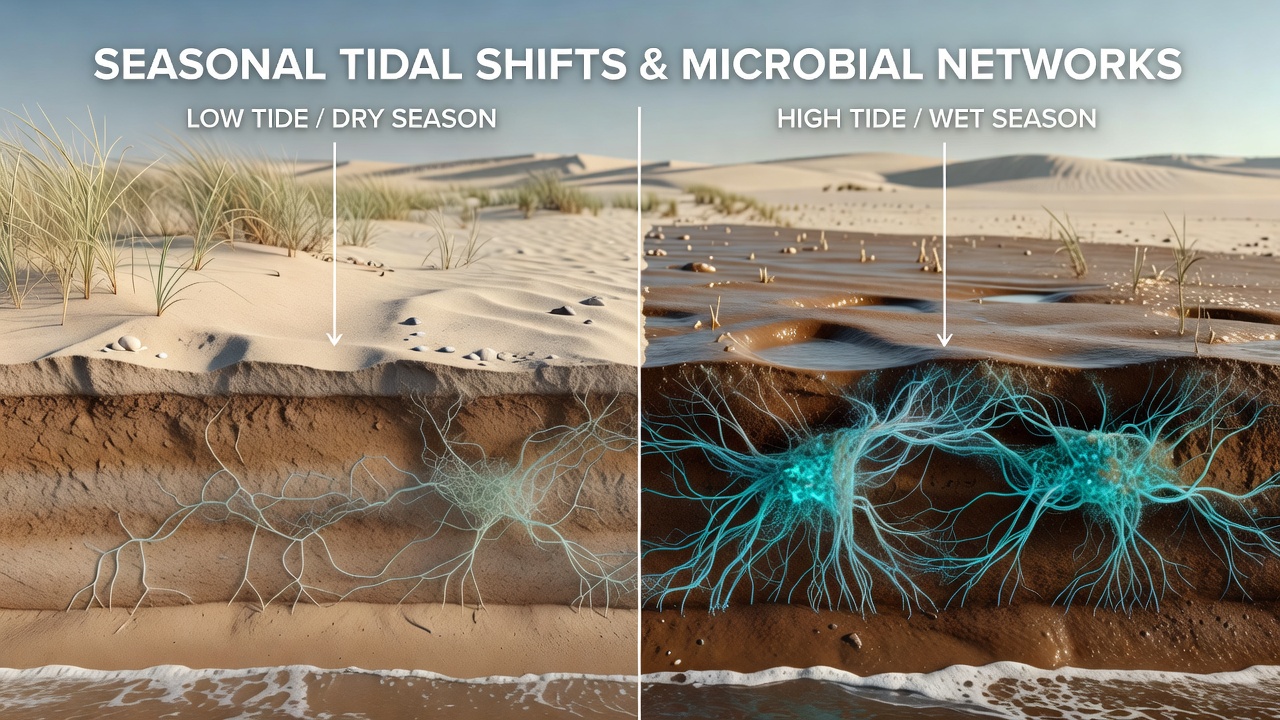
Coastal dunes form dynamic interfaces where ocean tides meet terrestrial ecosystems, and seasonal changes in tidal patterns reshape moisture levels along with salinity gradients in the soil. These shifts create fluctuating conditions that directly influence the composition and connectivity of microbial communities living in different soil layers. Researchers have documented how higher spring tides during certain months push saltwater farther inland, while neap tides allow freshwater influences to dominate, altering the chemical environment that microbes depend on for survival and interaction.
Soil Layer Structure in Coastal Dunes
Dune systems typically feature distinct vertical zones, with surface sands holding lower organic content compared to deeper layers where fine particles accumulate and retain more water. Top layers experience rapid drying between tidal events, whereas subsurface zones maintain steadier moisture because capillary action draws liquids upward from groundwater sources. Data from long-term monitoring sites show that these layers respond differently to tidal inundation, with upper sands showing quicker salinity spikes during storm surges while lower horizons buffer changes through slower drainage patterns.
Mechanisms of Tidal Influence on Microbes
Tidal movements introduce pulses of saltwater that modify pH, oxygen availability, and nutrient availability in dune soils. Bacteria and fungi form interconnected networks through nutrient exchange and signaling pathways, and these connections break or reform based on osmotic stress from incoming tides. Studies indicate that seasonal peaks in tidal amplitude, such as those observed during equinox periods, increase the frequency of inundation events and force microbes to adapt metabolic strategies or migrate within soil pores to maintain community stability.
Seasonal Patterns Observed Through 2026
Monitoring programs tracking sites along multiple coastlines reveal pronounced differences between winter and summer tidal regimes. Winter months often bring stronger storm-driven tides that deposit salt deeper into dune profiles, favoring halotolerant bacterial groups while suppressing others sensitive to high salinity. By contrast, summer neap tides allow greater freshwater seepage from rainfall, supporting diverse fungal networks that decompose organic matter at higher rates. As of October 2026, updated datasets from international coastal observatories confirm that these seasonal cycles have remained consistent over the past decade, with microbial biomass fluctuating by up to 40 percent between peak and low tide seasons according to measurements compiled by NOAA coastal research programs.
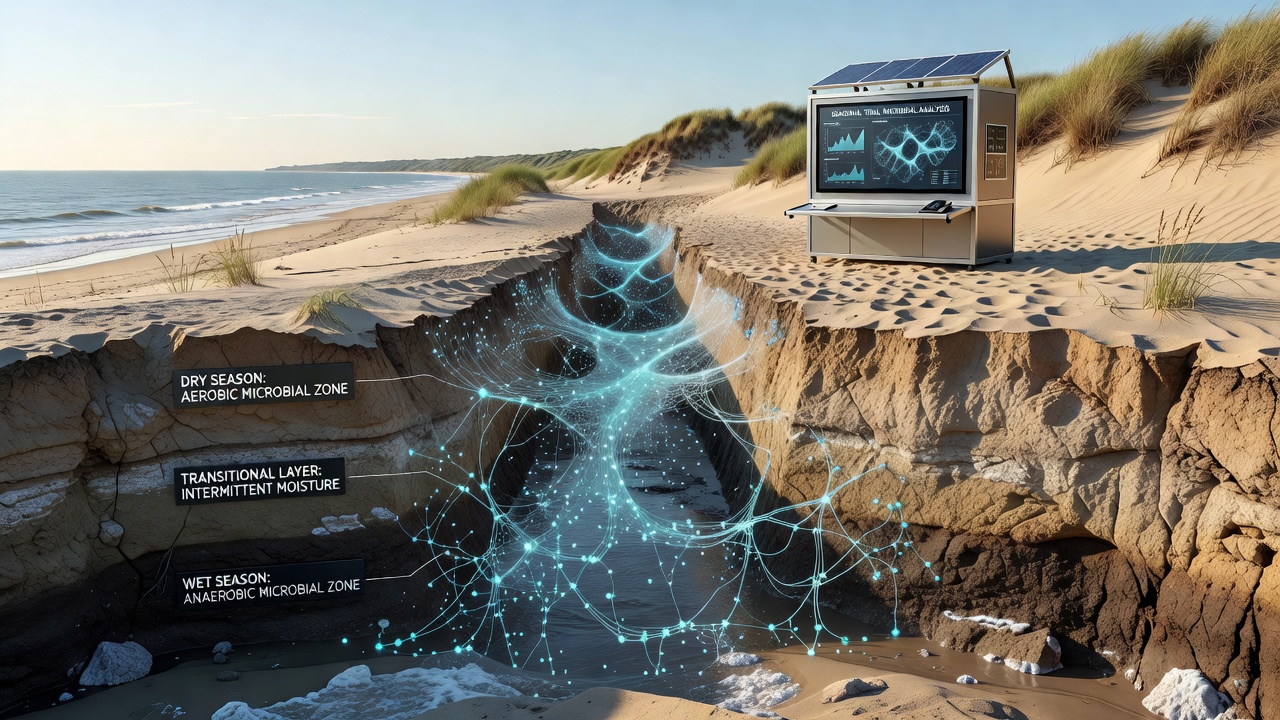
What's interesting is how autumn transitions create intermediate conditions where tidal ranges gradually increase, leading to gradual shifts in community structure rather than abrupt changes. Observers note that nitrogen-fixing bacteria thrive in these transitional periods because moderate salinity levels enhance their enzyme activity without overwhelming osmotic balance. In one documented case along Australian shorelines, researchers from CSIRO tracked how these networks reorganized after successive tidal events, resulting in stronger cross-layer connections between surface and subsurface populations.
Impacts on Nutrient Cycling and Resilience
Microbial networks drive key processes such as carbon sequestration and phosphorus mobilization within dune soils, and tidal seasonality modulates the efficiency of these cycles. During periods of frequent inundation, anaerobic bacteria gain dominance in waterlogged zones and produce compounds that influence plant root associations higher in the profile. Evidence suggests that prolonged exposure to variable tides strengthens overall network redundancy, allowing communities to recover faster from extreme weather events because alternative metabolic pathways already exist among surviving populations. Those who've studied dune systems across different latitudes find that sites with pronounced seasonal tidal swings support more resilient microbial webs compared to areas with minimal tidal variation.
Research Methods and Emerging Data
Scientists employ metagenomic sequencing alongside soil chemistry assays to map microbial interactions at fine scales. Transect sampling during different tidal phases captures how connectivity changes across seasons, revealing clusters of taxa that co-occur more frequently after repeated saltwater exposure. Recent analyses released in late 2026 highlight correlations between tidal height records and shifts in archaeal abundance, particularly in mid-depth layers where oxygen gradients are steepest. These findings build on earlier work by showing that seasonal patterns repeat reliably yet vary in intensity based on local geomorphology and prevailing wind directions.
Conclusion
Seasonal tidal shifts serve as primary drivers that restructure microbial networks across coastal dune soil layers through changes in salinity, moisture, and oxygen distribution. Long-term observations demonstrate consistent seasonal rhythms that influence community composition and functional connections, with data extending through October 2026 reinforcing the predictability of these responses. Continued monitoring across varied coastal regions will further clarify how these dynamics support broader ecosystem processes in dune habitats.