
Erik Hoffmann · 8 October 2026
The Hidden Role of Nocturnal Insect Activity in Redistributing Nutrients Across Shifting Sand Formations and Supporting Long-Term Habitat Resilience
Shifting sand formations in coastal and arid regions depend on complex biological processes that maintain nutrient balance despite constant wind and wave disturbance, and nocturnal insect activity contributes directly to these cycles through foraging, burrowing, and waste deposition. Researchers tracking dune systems across multiple continents have documented how species active primarily after dark move organic material from surface accumulations into subsurface layers, which in turn influences microbial communities and plant root establishment. Data collected through October 2026 shows consistent patterns of nutrient relocation that align with seasonal wind events and sediment movement.
Insect Species and Their Nocturnal Behaviors
Beetles from families such as Scarabaeidae and Carabidae dominate nocturnal activity in many dune environments, emerging after sunset to locate detritus, carrion, and fecal matter left by vertebrates. These insects tunnel into loose sand while carrying or rolling nutrient-rich particles, and their movements create temporary networks of channels that persist long enough for water and finer sediments to infiltrate. Ant species from genera including Camponotus and Formica also contribute by transporting seeds and organic fragments during nighttime foraging raids, depositing waste in underground chambers that become localized nutrient hotspots. Observations from field studies indicate that peak activity often coincides with periods of reduced wind, allowing insects to complete their tasks before dawn shifts the surface again.
Mechanisms of Nutrient Redistribution
Nutrient redistribution occurs when insects break down surface litter and relocate fragments or dissolved compounds deeper into the sand profile, a process that counters the tendency of organic material to remain concentrated in thin surface crusts vulnerable to erosion. Burrowing action mixes mineral particles with organic inputs, which raises local nitrogen and phosphorus availability for colonizing vegetation, while fecal pellets left along tunnel walls serve as slow-release fertilizer sources. In regions where dunes migrate several meters per year, these insect-mediated patches of enriched sand can anchor pioneer plants long enough for roots to stabilize small areas, and repeated cycles over multiple seasons build cumulative resilience against large-scale blowouts. Studies from Australian dune systems link such activity to measurable increases in soil organic carbon within the upper 30 centimeters of shifting substrates.
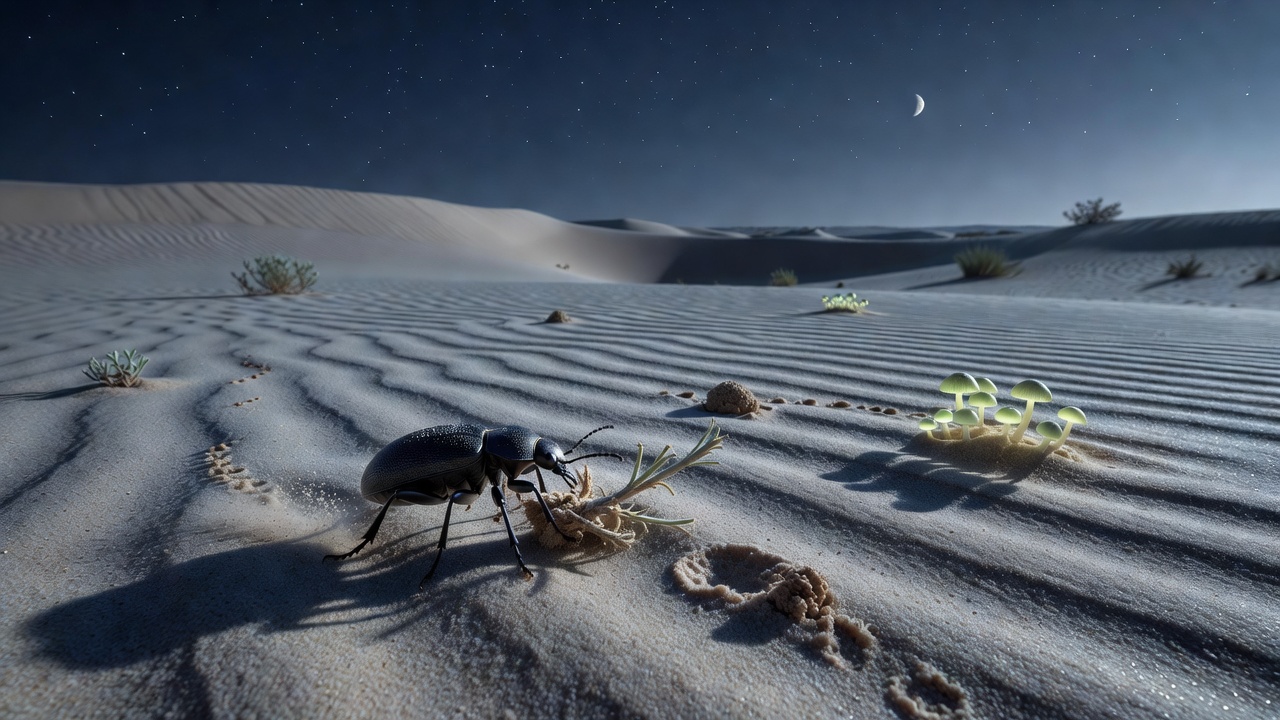
What's interesting is how these processes interact with wind-driven sediment flows, because insects frequently re-excavate tunnels after burial events, thereby reintroducing nutrients to newly deposited layers. Take one long-term monitoring project in the Namib Desert where researchers recorded nightly transport rates that moved an estimated 15 to 25 percent of available surface nitrogen into depths beyond the reach of daily temperature fluctuations. Similar findings from North American coastal sites suggest that nocturnal insect density correlates with higher rates of seedling survival during periods of sand accretion, although the exact contribution varies with moisture availability and predator pressure.
Support for Long-Term Habitat Resilience
Long-term habitat resilience emerges when repeated nutrient redistribution supports a wider range of plant species that in turn provide food and shelter for additional fauna, creating feedback loops that buffer dunes against extreme weather or prolonged drought. Evidence from monitoring programs shows that areas with higher nocturnal insect activity maintain greater plant cover and species diversity even after major storm events, because enriched microsites allow rapid recolonization once sand movement slows. According to figures from the Australian Government Department of Climate Change, Energy, the Environment and Water, dunes with documented insect-mediated nutrient cycling recovered vegetation structure faster than comparable sites lacking such activity. In parallel, work coordinated through Canadian research networks has recorded comparable patterns in Great Lakes shoreline dunes, where insect tunnels improved water retention and supported mycorrhizal associations critical for grass establishment.
Seasonal variations further shape these dynamics, since many nocturnal species reduce activity during colder months yet leave behind tunnel networks that continue to influence nutrient movement when spring rains arrive. This temporal aspect means that even brief windows of insect presence can produce lasting structural changes in the sand matrix. Observers note that predator-prey interactions at night also affect redistribution rates, because vertebrates that consume insects inadvertently spread fecal material containing partially digested nutrients across wider areas.
Conclusion
Collective evidence from multiple dune systems demonstrates that nocturnal insect activity serves as an essential, often overlooked component of nutrient cycling in shifting sand environments. By relocating organic matter, aerating substrates, and creating localized enrichment zones, these insects help sustain vegetation that stabilizes dunes over extended periods. Ongoing measurements through late 2026 continue to refine understanding of how these small-scale processes scale up to influence entire habitat networks, underscoring their importance for maintaining ecological function amid ongoing environmental change.